8 March


Why can't I register online?
We have found the most reliable way to handle registration is actually by phone. Meditation is all about connecting – connecting with your own deepest self, and connecting more deeply with others. We find that the Internet, while often convenient, is somewhat impersonal. We prefer the personal approach.
When I first heard the word "Aspiration" in the context of Sri Chinmoy's talks and writings, I would always pause. It was like hitting a bump in the road. Somehow I knew I didn't get it!
Hearing "Aspiration", I would say "what?" I think I understood the concept of countries' "Aspirations". That "aspiration" was abstract, positive and comprehensible yet distant in that it didn't have much to do with me. But when I read about personal "aspiration" something stirred inside of me. I could only sense at first what it was NOT. I knew from the context that it was not about "desire", wanting something at any cost or simply to posses it.
I re-read many sections where "aspiration" appeared in Sri Chinmoy’s writing and it confirmed that It was outside my conscious conception experience at that point. However it did not seem "unknowable" just currently "unknown".
For example My Lord's Secrets Revealed had many uses of the world aspiration* http://www.srichinmoylibrary.com/mlsr
As time passed I found more direct explanations of aspiration. Others had asked very pointed questions related to similar subjects. In the beginning my mind found it quicker to grasp the meaning from a question and answer format than poetry. Links to some of these aspiration related questions, answers and explanations can be found at
https://www.srichinmoy.org/resources/questions_answers/aspiration
In 1974 some related talks of Sri Chinmoy were published in My Rose Petals Part II:
Aspiration And Wisdom, http://www.srichinmoylibrary.com/mrp-27
Desire And Aspiration, http://www.srichinmoylibrary.com/mrp-21
Aspiration And Spirituality, http://www.srichinmoylibrary.com/mrp-30
Later Sri Chinmoy began to call me Adhiratha and said it meant "Divine charioteer carrying Earth-Aspiration** to the Supreme.
Recently in conversations with friends from my University days the relationship between "awareness" and "aspiration" was touched on. "Awareness" was a prime concern of sage Ramana Maharshi who was famous for his continual question of "Who am I". Carl Jung and his students were possibly the most known of recent western Psychologists to also explore this avenue. Carl Jung admired Ramana Maharshi and his comments are used for the forward of one of Ramana Maharishi’s books.
In searching for these two words at the Sri Chinmoy library site, 95 items are presented. http://www.srichinmoylibrary.com/search/site/aspiration%2520%252B%2520awareness
The first item included the two terms related to psychology where Carl Jung is mentioned: "Many years ago I studied Freud and Jung, and last year I studied an authority on Jung’s philosophy and psychology. There I found that they have come to the conclusion that awareness is all; they do not go any farther. I agree that awareness is of immense help to an ordinary human being. But spiritual seekers have to go beyond awareness. We have to make a conscious effort; and that conscious effort we call aspiration, inner aspiration." - excerpt from Soul-Education For The Family-World by Sri Chinmoy. Published by Agni Press in 1977. Question: "As far as psychology..."
Note: "Who am I?" was also the foundation of the path of the spiritual teacher Ramana Marhashi.
http://www.aspiringindia.org/saints_sages/ramana-maharshi/ramana-maharshi
=======================================
There was an earlier chat about aspiration and self-giving at the yahoo discussion group
==================================================
* Search aspiration
Searching "aspiration my lord's secrets" at the Sri Chinmoy library site returns 21uses of aspiration in My Lord's Secrets revealed. https://www.srichinmoysongs.com/search.jsp?query=aspiration+my+lord%27s+secrets
**Hyphen words
There are a number of hyphen separated words in Sri Chinmoy's writings. Many times these hyphen words would envoke in my mind or life a new way of "understanding". I have seen somewhere a fuller description of this type of word use by Sri Chinmoy. When I locate the exact reference I will post it here.
====================================================
Meditation getting started:
When I first came into contact with the concept of meditation was when I in the minor seminary (grade 9) in high school. If as tudent was "spacing out" or not paying attention in class the teacher wiould say "meditation was to be done at home". I think there was also a book called something like "daily meditations" that included short prayers or themes fo the day. The next time I remeber coming across meditation was writing a paper on Scocrates and "Know Thyself" for Philosophy class in my second year of College. I think it was the first class paper that I really enjoyed doing. I made a remark in the paper that in trying to discover what it meant to meditate I didn't get to know myself much beter - since I only got a headache. The professor much appreciated the remark. Later when the USA mititary service was comming up and it seemed like I might end up spending a lot of quite time by myself I began to explore in earnest some techniquesa and possible benifits to meditation. you can read more about my early seeking journey here Adhiratha Early Seeking.
Through the years I began to practice meditation from books and personal instruction. Some of the related books are lsited here Inspiring Books & Quotes. The most important thing about making progress with meditation seems to be daily practice and being around other people who value the experience and practice a similar technique regularly together.
From time to time I have led introductory sessions and shared techniques I value with groups of seekers. Many years ago I gave a series of 7 classes or workshops in: Ohio; Dallas, Texas; Queens and Long Island, NY; and Alberta, Canada; as well as to colleagues in UNICEF where I was working.
Since then much good instruction material has been produced I recommend 101 Meditation Techniques booklet and the more comprehensive book Meditation: Man perfection in God Satification (described at Inspiring Books & Quotes). I also sugest seeing where the Sri Chinmoy Centre is offering workshops in closes to your area.
Here is link to USA cities http://us.srichinmoycentre.org/meditation
Here is link to centers around the world: http://www.srichinmoycentre.org/contact-us
Page links above will also point to some on-line meditation courses and other helpful resources to get you started if there is not a workshop scheduled for your area. See: /meditation. This Ibelieve is the best on-line source for meditation
Below I am including a list of some of the topics I coverd in the workshops I presented or I have since added from others workshops I have attended.
You will se that the formats in different classes may differ. what they have in common is the actual practice of meditation techniques during the classes. thisI feel is the most important experience for a new seeker or one trying to deepen thir personal practice. I see the philosophy shared during the sessions also very useful for some participants, but the best results always seem to come to those who learn the techniques and immediately begin to practice a few of them each day in the own private setting. Over the years the philosopy has become more concise to express and the time available to practice meditation techniques in the courses has increased with notable appreciation from participants - who are more able to share the experience they are having practicing the various techniques daily outside the class on their own and seek more clarification on techniques of most interst.
Sample Outlines to add more detail:
Add highlights of all the topics covered: (or possibily a chart with the topics listed and check colum if covered in 4, 7, 9 or other course structure)
=================================================================================
test from word add:
(to be seprate page or article)
A colleague recently requested me to speak, read or recite some things related to "Happiness: From the Inside Out" during a 8 to 10 Minute time slot.It was the ending of a exhibit at the NY Public Library near the United Nations in NY. I had only noticed the location for the library recently even though I was very appreciative of such places and as part of my masters programme at City University (CUNY) I had taken and enjoyed courses on Library and Information Science....
I agreed without too much thinking because of the enthusiasm and dedicated spirit of the one asking.There was plenty of time to let the request percolate on back burner before the day of the event..
But as the day drew near I realized there was so much to chose from.I narrowed it down to this
Happiness
(to be seprate page or article)
=====================================
Introduction:
1. Since the exhibit is of Sri Chinmoy's Paintings and writings I felt I will begin with 3 pieces about the child and the heart.
.
a. You Can Be Always Happy
You can be always happy
If you believe like a child
And behave like a gentleman.
Sri Chinmoy, Ten Thousand Flower-Flames, Part 21, Agni Press, 1981
-------------------------------
b. An Ageless Child
Happiness is an ageless child In my pure heart-garden.
Nowhere I see and feel The world's heavy burden.
16 June 1998 - Sri Chinmoy, Sail My Heartbeat Sail, Part 1, Agni Press, 1998
---------------------------------------
c The Whispering child
If you want to be happy,
Then at every moment listen
To the whispering child
In your heart.
Sri Chinmoy, Twenty-Seven Thousand Aspiration-Plants, Part 226, Agni Press, 1996
========================================================================================
2. Children's Stories have given much happiness and encouragement to our aspiring hearts . Here are afew lines from "The Little Prince"::
"Goodbye," said the fox. "And now here is my secret, a very simple secret:
It is only with the heart that one can see rightly; what is essential is invisible to the eye."
"What is essential is invisible to the eye," the little prince repeated, so that he would be sure to remember.
- Chapter 21 -the little prince befriends the fox. -Le Petit Prince (1943) by Antoine de Saint Exupéry, translated into English as The Little Prince. - http://home.pacific.net.hk/~rebylee/text/prince/index.html
and from another work: possibly wind, sand and stars:
Love is not looking into another's eye. It is looking in the same direction together -paraprhased from Antoine de Saint Exupéry.
==========================================
3. Another Book appreciated by children of all ages, which brought a joy of knowing and encouragement to many is "Johathon Livingston Seagull.
A story of personal transcendence and believing in one self.and the happiness of striving for perfection
"Charles -Roklnd! Judy Lee! Are they also special and gifted and divine?
No more than you are, no more than I am.
The only difference, the only one , is that they have begun to understand what they really are
and have begun to practice it." page 114
"What did you just do how did we get here?"...
... Like everything else,...Practice!
Recently I read "Mushashi" by Eiji Yoshikawa - As story of self transcendence, discipline and practice in the search for the joy of perfection. It is a Classic Samurai novel about the real exploits of the most famous swordsman.-
========================================
4. One might say the themes in these works which have given much joy and happiness are just utopian dreams
- on that concept I quote from Thomas Jefferson on all the dreamers of past and future dreams...
"All eyes are opened, or opening to the rights of man.
The general spread of the light of science has already laid open to every view the palpable truth,
that the mass of mankind has not been born with saddles on their backs.
Nor a favored few booted and spurred, ready to ride them legitimately, by the grace of God.
Mine, after all, may be a Utopian dream, but being innocent,
I have thought I might indulge in it till I go to the land of dreams,
and sleep there with the dreamers of all past and future times.
Light and Liberty: Reflections on the Pursuit of Happiness (Modern Library Classics) [Paperback]
Thomas Jefferson (Author), Eric Petersen (Editor) - page 78
=============================================
5. Kurt Vonnegut given us surprise and happiness from his characters and the joy of discovery.
. For example i the Sirens of Titan. the main character finds a letter after having his memory erased again by the controlling power
It list the things he should either take note of or try to figure out
The letter is addresed to him ...
Unk, ... spend a lot of time trying to figure out why whoever made everything went and made it.
And maybe all books that we find something in - from a oneness perspective of humanity - ...from our collective experience - simply letters to ourselves - trying to help us remember and relearn as a species what we have some times forgotten
===========================================================
6. My Parents had an appreciation for short practical sayings especially for facing difficulties...and giving advice to us children...
One they had independently learned about cheerfulness: her in western Canada and my dad in New York.
"Smile and the world smiles with you,
Cry and you I cry alone.
For cheerful grin will get you in
Where a teardrop is never known."
recited by jack and wanda keefe
7. Things that make me happy:
a. Happiness is planting a bud which comes up again after winter - and for many years - thereafter
it doesn't s seem time-bound.
b. Happiness is joy in being surprised,
. by an unexpected realization;
or a new appreciation for previously un noticed beings or things
c. Happiness is being contented
- in the morning with anticipation (for the full day of possibilities)
- in the evening - with appreciation for the experienced realities.
d. Happiness is knowing love is not timebound.
8. Happiness is being silly......
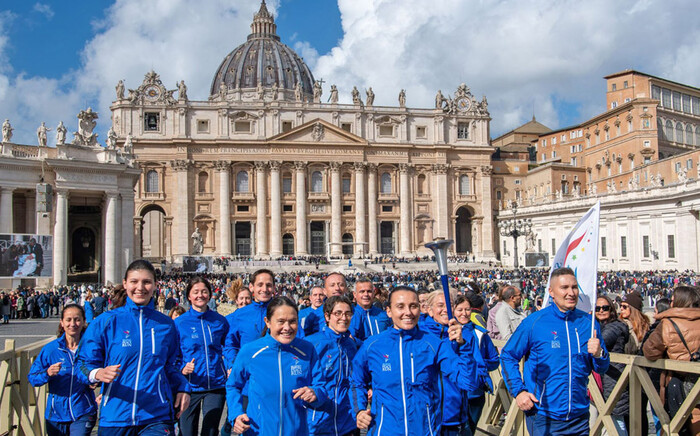
I had the fortune to be in Limerick Ireland as part of torch passing event and to be able to share Limericks with the Mayor of Limerick
Here are two:
I never saw a purple cow and I never hope to see one
but I tell you something any how I would rather see than be one.
I once had a room without a floor, I wouldn't mind not having a door
but this walking around without touching the Ground
is getting to be quite a boor.
==================================================
9. Some books give Happiness or even joy just frrm their titles:
- The Wisdom of Idiots by Idres Shah - the short stories of Sufie Idiots and Saints are full of large and small illuminations . On another occasion possibily we could share some similar short stories
==============================================
10. Play and Sports are a source of Happiness for many:
A wonderful quote about child's play and adults sports is by Emil Zatapek the legendary Olynpic Gold Medalist Champion from the Czech Republic.
Children play for joy; adults play for medals.
Medals are the means to promote sports,
but the goal is to contribute a healthy, happy and harmonious life to man.
from "Emil Zatopek: Earth's Tearing Cry And Heaven's Beaming Smile by Sri Chinmoy
-Emile Zatopek was a Olympian runnng champion and Gold Medal winner
===============================================
11. Finally I would like to end with a quote from from Sri Chinmoy, that gave my father , Jack Keefe great happinessa to recite with emphasis.
:There is only one perfect road.
And that road is ahead of you ,
always ahead of you
- jack keefe's favorite quote of Sri Chinmoy.
----------------------------------------------------------
If longer story needed:
Story about Vivekananda ( at 5 yers old ) a mothers worry becomes joy:
One day, when he was only five years old, Vivekananda saw in the living room a few Indian hookahs or smoking pipes. One was for the Brahmins, one for the Kshatriyas and one for the Muslims. He tasted each one, and to his surprise discovered that all the hookahs tasted the same.
Alas, he was caught by his own father. "What are you doing, Bile?" he asked.
Vivekananda replied, "Father, I was just examining the smoking pipes. I thought that the one for Brahmins would be better than the one for Kshatriyas, because Brahmins are so great. And the Muslims are so heroic and spirited, so I thought that the Muslim pipe would be special. But they are all the same. I wish to tell you, Father, that they are all the same. No one pipe is superior to another."
Vivekananda's parents were simply shocked. "How is it that you have started smoking at such a tender age?" they asked. "And what kind of things is a small boy like you saying?"
Then his mother said, "My son, you are too spoiled. You have become too smart. Come here." The child came to the mother and she took him upstairs to his room and closed the door from outside.
In two hours' time the maid came running to the mother, screaming: "Bile is throwing away all his clothes. Everything he has in his room he is throwing out through the window! There are a few beggars below who are grabbing his garments as they fall. And he himself is so happy!"
At this the mother ran upstairs and demanded, "What is the matter with you, Bile? Such expensive clothes you are throwing away!"
Vivekananda replied, "Mother, we are so rich. We can have whatever we want, whenever we want. But these are poor people. They have nothing, nothing. If we do not give to them, then who will give to them? We have enough, more than enough; so my heart wants to give these things away. They need them more than I do."
His mother's heart was full of joy and delight. She embraced her son and shed tears of delight that his heart was so sympathetic, so vast and so all-giving, and that he had so much oneness with the poor and with the Supreme Pilot in all.
22 January 1979
Sri Chinmoy, Great Indian Meals: Divinely Delicious and Supremely Nourishing, Part 5, Agni Press, 1979
First-hand experiences of meditation and spirituality.




interviews with Sri Chinmoy's students


Except where explicitly stated otherwise, the contents of this site are licensed under a Creative Commons Attribution-NonCommercial-NoDerivs 3.0 Unported License. read more »
SriChinmoyCentre.org is a Vasudeva Server project.
